The Original Temptation
Cast your mind back to the Garden of Eden, where God provided every tree for Adam and his wife to eat from, except the Tree of the Knowledge of Good and Evil. There we read:
Genesis 3:1-7
“Now the serpent was more subtil than any beast of the field which the Lord God had made. And he said unto the woman, Yea, hath God said, Ye shall not eat of every tree of the garden? And the woman said unto the serpent, We may eat of the fruit of the trees of the garden: But of the fruit of the tree which is in the midst of the garden, God hath said, Ye shall not eat of it, neither shall ye touch it, lest ye die. And the serpent said unto the woman, Ye shall not surely die: For God doth know that in the day ye eat thereof, then your eyes shall be opened, and ye shall be as gods, knowing good and evil. And when the woman saw that the tree was good for food, and that it was pleasant to the eyes, and a tree to be desired to make one wise, she took of the fruit thereof, and did eat, and gave also unto her husband with her; and he did eat. And the eyes of them both were opened, and they knew that they were naked; and they sewed fig leaves together, and made themselves aprons.”

Notice the shape of the temptation. Satan seeks to remove the bad consequences of disobeying God, and only offer good ones. He claims that man can become like God through this forbidden path to knowledge. He offers a shortcut to it, a way of becoming "as gods" that bypasses trust in God's own Word. That basic pattern, knowledge sought as a substitute for trusting God, rather than knowledge received from him, has echoed through every generation since.
This can subtly appear in different ways. The same pattern even surfaces at points within later Jewish tradition. It is said for instance in the Talmud that the rabbis once defeated God, by quoting the Torah (wrongly and out of context) back to him in order to reject his “Bat Qol” or “Voice from Heaven”, when one rabbi gave a minority opinion in a dispute over the Oven of Akhnai (Bava Metzia 59a). Maimonides taught that Abraham initially discovered God through his own quest for knowledge, writing:
“"He had no teacher, nor was there anyone to inform him. Rather, he was mired in Ur Kasdim among the foolish idolaters. His father, mother, and all the people [around him] were idol worshipers, and he would worship with them. [However,] his heart was exploring and [gaining] understanding. Ultimately, he appreciated the way of truth and understood the path of righteousness through his accurate comprehension. He realized that there was one God who controlled the sphere, that He created everything, and that there is no other God among all the other entities”.
These are not small points. They reflect a real and understandable impulse, the desire to reason one's way to God, to master divine truth rather than simply receive it. In the Oven of Akhnai episode, the majority did not merely disagree with a heavenly voice; they set it aside as no longer having a claim on the discussion, on the grounds that Torah "is not in heaven" but has already been given into the hands of the sages to interpret. Human reasoning is placed in a position to overrule a direct word from God. Maimonides' account of Abraham moves in the same direction from a different angle, presenting saving knowledge of God as something a righteous man arrives at through his own unaided reflection, rather than something God must reveal and give.
A further example reflects the same instinct to resolve difficulties about God's own nature through human speculation. The Talmud, in Chullin 60b, records a tradition that God himself acknowledges a fault in having made the moon smaller than the sun, and that he instructed atonement to be made for this through the sacrifice of a goat at each new moon. Such a tradition presents the Creator as needing to atone for his own decision, a picture very different from the God revealed throughout the Hebrew Scriptures, who declares of himself, "I am the Lord, I change not" (Malachi 3:6), and whose works are called perfect: "He is the Rock, his work is perfect: for all his ways are judgment: a God of truth and without iniquity, just and right is he" (Deuteronomy 32:4).
Taken together, these examples show the same underlying pattern: a confidence that human reasoning can, when needed, stand in judgment over the plain word of God, or even over God's own perfection. But Scripture consistently commends the opposite posture: not autonomous discovery, but humble reception of what God himself has spoken.
The Search for Hidden Knowledge
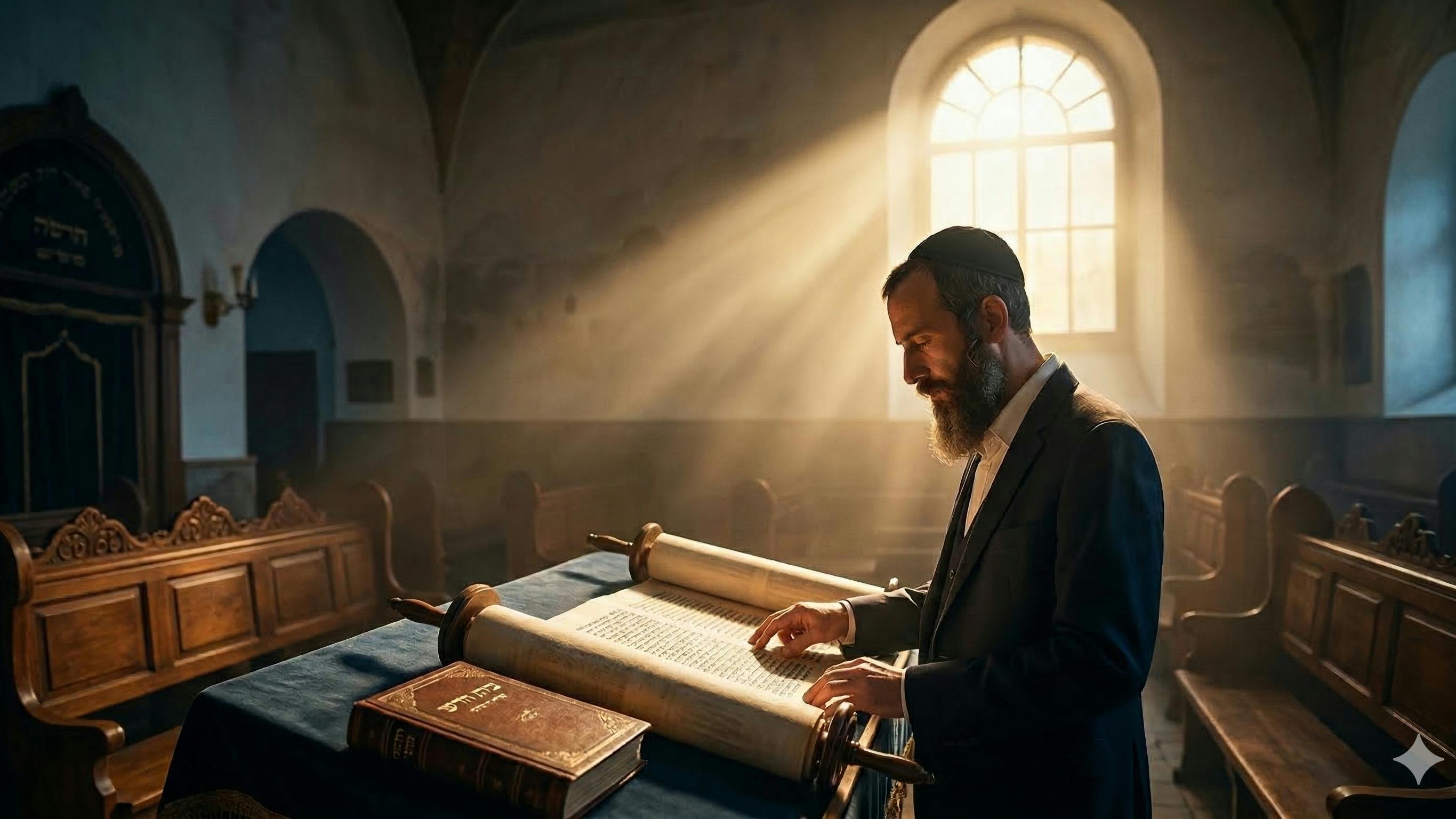
Out of this same impulse toward mastery came Kabbalah, a body of teaching built on the conviction that beneath the plain sense of the Hebrew text lies an encoded and secret layer of meaning, accessible only to the initiated few. Foundational works such as the Sefer Yetzirah and the Zohar describe an elaborate structure of ten sefirot, or divine emanations, through which the hidden, infinite God (Ein Sof) is said to make himself gradually knowable to the world. To draw out meaning thought to lie beneath the surface of Scripture, Kabbalists developed specific interpretive techniques: gematria, in which words are assigned numerical values and reinterpreted through other words or phrases sharing that value; notarikon, in which the individual letters of a word are treated as an acronym unlocking new sentences and ideas; and temurah, in which letters are systematically substituted for other letters according to fixed patterns, so that a word yields an entirely different word beneath it. Alongside these methods stand traditions such as the belief that the seventy-two-letter Name of God carries independent power when rightly pronounced or arranged, or that Solomon employed a miraculous "worm of shamir" able to cut through stone and diamond without iron tools, so that the Temple could be built in unbroken silence.
These share a common assumption: that the true, saving meaning of God's word is not what he plainly said, but something hidden beneath it, unlocked by human technique rather than given freely by God himself. This is deeply appealing, because it offers direct, privileged access to divine mystery without the harder task of simply trusting what God has already made plain. It is the same ancient longing to "be as gods, knowing" what has been hidden, dressed in the language of holiness rather than rebellion.
Where the Search Leads Today
This same hunger for mystical shortcuts still draws people today — some toward Kabbalistic study within Hasidic circles, others toward gurus and ashrams in India, shamanic practices in South America, or attempts to contact the spirit world directly. Still others turn to drugs in search of transcendence, at great cost to body and soul. The forms differ, but the underlying search is the same: for a knowledge that promises transformation apart from the plain word of the God who made us.
Perhaps you yourself have felt this pull. If so, it is worth pausing over what the prophets of Israel had to say about exactly this danger. Jeremiah continually warned of a people content to be led astray by false teachers and captures the tragedy at its root where people carve out their own paths.
Jeremiah 2:13
For my people have committed two evils; they have forsaken me the fountain of living waters, and hewed them out cisterns, broken cisterns, that can hold no water.
This is the danger of every mystical shortcut, however sincerely pursued: it offers a cistern of our own making in place of the fountain God himself provides.
The True Fountain: Isaiah's Suffering Servant
The very Hebrew Scriptures that Israel treasures point, centuries in advance, to the One through whom that fountain would be opened to all — not a hidden or coded message, but a plain and repeated promise. Isaiah 53 sets this before us with striking clarity, describing a suffering servant who would bear the sin of many:
Who hath believed our report? and to whom is the arm of the Lord revealed? For he shall grow up before him as a tender plant, and as a root out of a dry ground: he hath no form nor comeliness; and when we shall see him, there is no beauty that we should desire him. He is despised and rejected of men; a man of sorrows, and acquainted with grief: and we hid as it were our faces from him; he was despised, and we esteemed him not.
Surely he hath borne our griefs, and carried our sorrows: yet we did esteem him stricken, smitten of God, and afflicted. But he was wounded for our transgressions, he was bruised for our iniquities: the chastisement of our peace was upon him; and with his stripes we are healed. All we like sheep have gone astray; we have turned every one to his own way; and the Lord hath laid on him the iniquity of us all. He was oppressed, and he was afflicted, yet he opened not his mouth: he is brought as a lamb to the slaughter, and as a sheep before her shearers is dumb, so he openeth not his mouth. He was taken from prison and from judgment: and who shall declare his generation? for he was cut off out of the land of the living: for the transgression of my people was he stricken. And he made his grave with the wicked, and with the rich in his death; because he had done no violence, neither was any deceit in his mouth.
Yet it pleased the Lord to bruise him; he hath put him to grief: when thou shalt make his soul an offering for sin, he shall see his seed, he shall prolong his days, and the pleasure of the Lord shall prosper in his hand. He shall see of the travail of his soul, and shall be satisfied: by his knowledge shall my righteous servant justify many; for he shall bear their iniquities. Therefore will I divide him a portion with the great, and he shall divide the spoil with the strong; because he hath poured out his soul unto death: and he was numbered with the transgressors; and he bare the sin of many, and made intercession for the transgressors.
Notice the striking phrase in the middle of this passage: "by his knowledge shall my righteous servant justify many." Here is the true knowledge your soul is searching for — not a secret code hidden in the letters of the text, but a person, plainly revealed, who bears what we cannot bear ourselves.
An Invitation
If you have been searching for peace through mysticism, through Kabbalah, or through any other path that promises hidden knowledge, you are seeking in the wrong place. Look to the God of Israel, who neither slumbers nor sleeps, and his Son Jesus Christ — the Messiah and King of Israel, promised throughout your own Scriptures. Believe what the inspired Holy Scriptures say of him. This is the saving knowledge your heart needs and must seek.
More Topics
You might alsoo be interested in these topics.